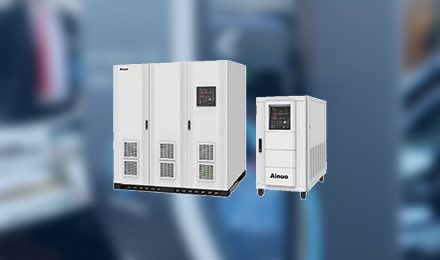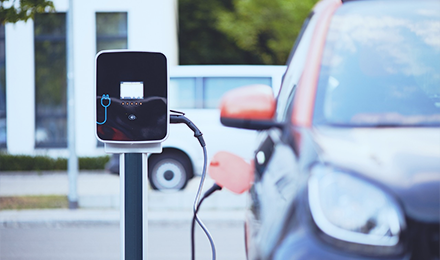
The rapid growth of electric vehicles (EVs) has transformed the automotive industry. As manufacturers race to develop safer, more efficient, and longer-lasting electric vehicles, testing technologies have become increasingly sophisticated. One critical piece of equipment at the heart of modern EV development is the battery simulator DC power supply.
Unlike conventional DC power supplies, battery simulators are specifically designed to replicate the electrical behavior of real batteries with exceptional precision. They enable engineers to test electric powertrains, battery management systems (BMS), onboard chargers, DC-DC converters, and other vehicle components without relying on physical battery packs.
This article explores what a battery simulator DC power supply is, how it works, and why it has become an essential tool for electric vehicle testing.
Understanding a Battery Simulator DC Power Supply
A battery simulator DC power supply is a programmable power source capable of accurately emulating the voltage, current, internal resistance, charging characteristics, and dynamic behavior of a rechargeable battery.
Instead of connecting expensive lithium-ion battery packs during development, engineers use a battery simulator to provide controlled electrical conditions that closely resemble those of actual batteries.
Unlike standard laboratory power supplies that simply output constant voltage or constant current, battery simulators can reproduce realistic battery responses under changing load conditions. This allows engineers to safely evaluate how electronic systems perform during charging, acceleration, regenerative braking, and fault scenarios.
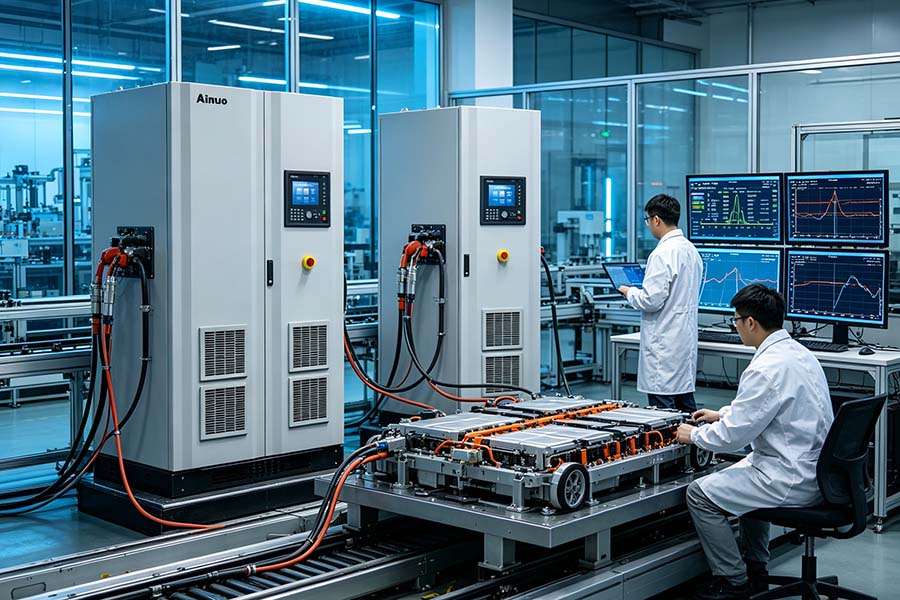
Battery simulators are commonly used in:
How Does a Battery Simulator Work?
A battery simulator uses advanced digital control systems to mimic the electrical characteristics of various battery chemistries, including:
The system continuously adjusts output voltage and current according to programmed battery models or user-defined parameters.
For example, when an inverter suddenly draws high current during acceleration, the battery simulator instantly reproduces the voltage drop caused by the battery's internal resistance. Similarly, during regenerative braking, it accurately absorbs returning energy while maintaining realistic battery behavior.
This dynamic response is nearly impossible with conventional DC power supplies.
Key Features of Battery Simulator DC Power Supplies
Modern battery simulators include numerous advanced capabilities that make them indispensable for EV testing.
1. High-Speed Dynamic Response
Electric vehicle systems change operating conditions within milliseconds.
Battery simulators respond extremely quickly to changing loads, accurately replicating battery behavior during:
This fast transient response ensures realistic testing conditions.
2. Programmable Battery Models
Engineers can configure battery simulators to emulate batteries of different:
This flexibility allows one simulator to replace numerous physical battery packs.
3. Bidirectional Power Flow
Many advanced battery simulators are bidirectional.
This means they can both:
This feature is especially valuable during regenerative braking tests, where power flows back from the motor drive into the simulated battery.
4. Accurate Voltage Simulation
Real batteries do not maintain perfectly constant voltage.
Battery simulators reproduce:
The result is highly realistic testing.
5. Safety Functions
Battery testing involves high voltages and large currents.
Battery simulators typically include:
These features protect both equipment and personnel.
Why Not Use Real Batteries?
Although actual battery packs provide realistic conditions, they introduce numerous challenges.
High Cost
Large EV battery packs are expensive.
Repeated testing can significantly shorten battery life, making development more costly.
Safety Risks
Lithium-ion batteries carry risks including:
Battery simulators eliminate many of these hazards.
Limited Repeatability
Battery characteristics change over time.
Temperature, age, and previous charge cycles all affect performance.
Battery simulators provide identical testing conditions every time.
Slow Testing
Charging and discharging physical batteries takes time.
Battery simulators can instantly change battery conditions, greatly accelerating development.
Applications in Electric Vehicle Testing
Battery simulators support nearly every stage of EV development.
Battery Management System (BMS) Testing
The BMS is responsible for monitoring and protecting the battery pack.
Engineers use battery simulators to verify:
Because battery conditions can be precisely controlled, engineers can safely test abnormal situations that would be risky with real batteries.
Electric Motor Drive Testing
Electric motors experience rapidly changing loads.
Battery simulators allow engineers to evaluate:
without needing a full battery pack.
Onboard Charger Testing
Battery simulators accurately emulate battery charging behavior, making them ideal for testing:
Regenerative Braking Validation
Regenerative braking returns energy to the battery.
Bidirectional battery simulators absorb this energy while accurately reproducing battery charging behavior.
This capability is essential for optimizing vehicle efficiency.
DC-DC Converter Testing
Modern EVs contain multiple voltage systems.
Battery simulators provide stable yet realistic input conditions for evaluating:
Advantages of Using Battery Simulators
Faster Product Development
Battery simulators reduce development cycles by allowing engineers to instantly configure different battery conditions without replacing hardware.
Improved Test Accuracy
Because parameters are digitally controlled, testing becomes highly repeatable.
Results are more reliable than those obtained using aging battery packs.
Lower Operating Costs
Battery simulators eliminate:
Over time, these savings can be substantial.
Enhanced Safety
Testing dangerous fault conditions becomes much safer because no chemical energy is stored within the simulator itself.
Engineers can simulate:
without risking damage to costly battery packs.
Flexible Testing
One battery simulator can emulate hundreds of different battery configurations, allowing manufacturers to test multiple vehicle platforms using the same equipment.
Important Specifications to Consider
When selecting a battery simulator DC power supply, engineers typically evaluate several performance parameters.
Voltage Range
The simulator should cover the operating voltage of the intended battery system.
Passenger EV battery packs often operate between 200 V and 800 V, while some commercial and high-performance vehicles exceed these values.
Current Capacity
High-power motor drives may require hundreds or even thousands of amperes during peak operation.
The simulator must support these current demands.
Power Rating
Power ratings vary from a few kilowatts for component testing to hundreds of kilowatts for complete powertrain validation.
Response Speed
Fast transient response ensures accurate simulation of real-world driving conditions.
Battery Modeling Capability
Advanced systems support customizable battery models, enabling engineers to simulate:
Communication Interfaces
Modern battery simulators often integrate with automated test systems using interfaces such as:
These interfaces simplify integration into automated testing environments.
Future Trends in Battery Simulation
As EV technology evolves, battery simulators continue to become more sophisticated.
Emerging developments include:
These innovations enable manufacturers to test increasingly complex electric powertrains while reducing development time and improving product reliability.
The rise of solid-state batteries, ultra-fast charging systems, and advanced battery management algorithms will further increase the demand for highly accurate battery simulation technologies.
Conclusion
Battery simulator DC power supplies have become indispensable tools in modern electric vehicle development. By accurately replicating the behavior of real battery packs, they enable engineers to validate battery management systems, power electronics, chargers, and electric drivetrains in a safe, repeatable, and cost-effective manner.
Compared with testing using physical batteries, battery simulators offer significant advantages in terms of safety, flexibility, speed, accuracy, and operational cost. Their ability to emulate different battery chemistries, capacities, charging states, and fault conditions allows manufacturers to accelerate development while improving product quality and reliability.
As electric vehicles continue to advance and battery technologies become more sophisticated, battery simulator DC power supplies will remain a cornerstone of automotive testing. They empower engineers to innovate with confidence, shorten development cycles, and deliver the next generation of efficient, reliable, and high-performance electric vehicles to market.
*Please fill in the required information carefully, and we will contact you within 4-8 hours.

 TEL:+86 532 83995188
 PHONE:+86 177 5322 5039
 E-MAIL:ainuo@ainuo.com
 ADDRESS:No. 134 Zhuzhou Rd, Laoshan District, Qingdao, China


Copyright©2025. Aino Instrument Co., Ltd All Rights Reserved.
Powered by:WDL